Well Water Solutions

Well Water Problems?
We Know Exactly What To Do.

Iron, sulfur, bacteria, hardness. South Texas wells have all of it. We test on-site and build a system for YOUR well's specific chemistry, not a generic fix.
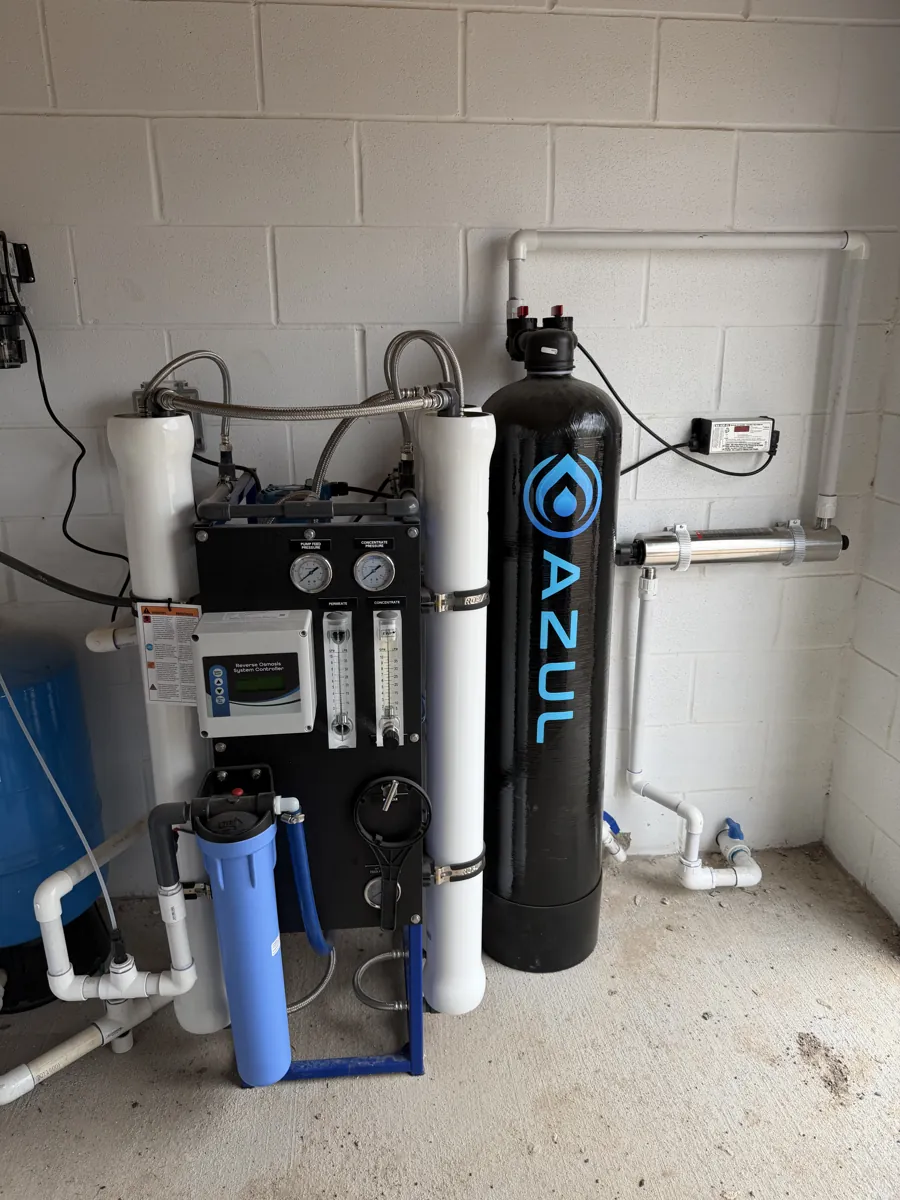
Azul Water Co commercial-grade well water system with UV treatment and reverse osmosis — Laredo TX
Common Well Water Problems

The 5 Most Common Well Water Problems We Fix

South Texas wells are all different. Here's what we find and fix most often.

1. Iron & Rust Staining

Orange/brown stains on sinks, tubs, and laundry. Metallic taste. Iron clogs pipes over time. We measure iron levels precisely and size the right iron filtration media.

2. Sulfur (Rotten Egg Smell)

Hydrogen sulfide gas gives well water that unmistakable rotten egg odor. An oxidizing filter or chlorination system eliminates it at the source.

3. Bacteria & Microorganisms

Private wells aren't regulated like city water. Coliform bacteria, E. coli, and other microorganisms require UV sterilization or chemical treatment, especially after flooding.

4. Extreme Hardness

Well water in South Texas can test at 40–80+ GPG, far harder than city water. Standard softeners need to be sized for well water flow rates and iron content.

5. Sediment & Turbidity

Sand, silt, and clay particles from the aquifer clog fixtures, damage appliances, and carry other contaminants. Pre-filtration stages protect the whole system downstream.

What We Install for Well Water

Systems built for your well's exact chemistry.

Every system starts with a full on-site test. Then we build.

Iron & Sulfur Filter

Oxidizing Media Filter with Automatic Backwash

Multi-media oxidizing filter removes iron, manganese, and hydrogen sulfide without chemicals. Automatic backwash cycle keeps it performing at full capacity. Sized to your well's flow rate.

Get a Quote

Well Water Softener (Azul Essentials, Well Rated)

Whole-House Softener Sized for Well Flow Rates

Our Azul Essentials system, properly sized for well water flow rates and iron content. Removes hardness that destroys plumbing and appliances. Configured to protect resin from iron fouling.

Get a Quote

UV Sterilization System

NSF/ANSI 55 Certified, 99.99% Pathogen Destruction

Destroys 99.99% of bacteria, viruses, and microorganisms without chemicals or taste changes. NSF/ANSI 55 certified. Required for any well with past bacteria detections, and strongly recommended as a standard precaution.

Get a Quote

A550 Reverse Osmosis for Well Water

Final Purification Layer at the Drinking Tap

Even with a whole-home system, the A550 RO adds a final purification layer at the drinking tap, removing any trace TDS, metals, or microorganisms that got past the upstream stages. Especially recommended for wells with any history of bacteria. NSF/ANSI 58 certified.

Add to My System
Well Water FAQ

Well water questions, straight answers.

How often should I test my well water? +×

At minimum, annually. But also test immediately after any flooding event, nearby construction or drilling, a change in your water's taste, odor, or color, or if a neighbor's well tests positive for contaminants. Many things can change underground without warning, and regular testing is your only reliable protection.

How is well water treatment different from city water treatment? +×

City water is pre-treated: chlorinated, pH-adjusted, and tested before it reaches you. Well water is completely untreated. Bacteria, iron, hardness, hydrogen sulfide, and sediment levels vary by location, season, and aquifer depth. No two wells are identical. That's why every well system we build starts with a full on-site test. There's no shortcut.

Do I need a UV system? +×

If your well has ever tested positive for bacteria, the answer is yes, it's a must. If you're on a shallow well, near agricultural land, or near any septic systems, we strongly recommend UV as a precaution. Even without a positive bacteria test, UV is inexpensive insurance that gives you a final kill step for microorganisms. We include it in our Whole-Home Well Package for this reason.

Will a softener help with iron staining? +×

Partially, and only at low levels. Ion exchange softeners can remove dissolved ferrous iron up to roughly 1–3 PPM, depending on the resin and settings. Above that, iron fouls the softener resin and reduces efficiency. For higher iron levels, which are common in South Texas wells, you need a dedicated iron filter upstream of the softener. We measure your iron levels at the site test and design accordingly.

Does filtering well water affect the pressure? +×

A properly sized system has minimal pressure impact, typically less than 2–3 PSI across the whole treatment train. We account for your well pump's GPM rate when selecting equipment. Undersized equipment on a high-flow well causes pressure drops, which is exactly why we do a site assessment before recommending anything. We watch for oversizing too; unnecessarily large systems waste water during backwash cycles.

Book a Well Water Site Test

We come to you, test on-site, and give you a full written report before recommending anything. Free for properties in the Laredo area.

Well Water Appointment

Book Your Free Well Water Site Test

We come to your property, test on-site, and give you a written report before we recommend anything.

Or call us directly: (956) 307-7852

Book Well Test ↓
Call Book Well Test
Español